The Charging Cable Is the New Seedbox: Phone-First Sharing Grows Up
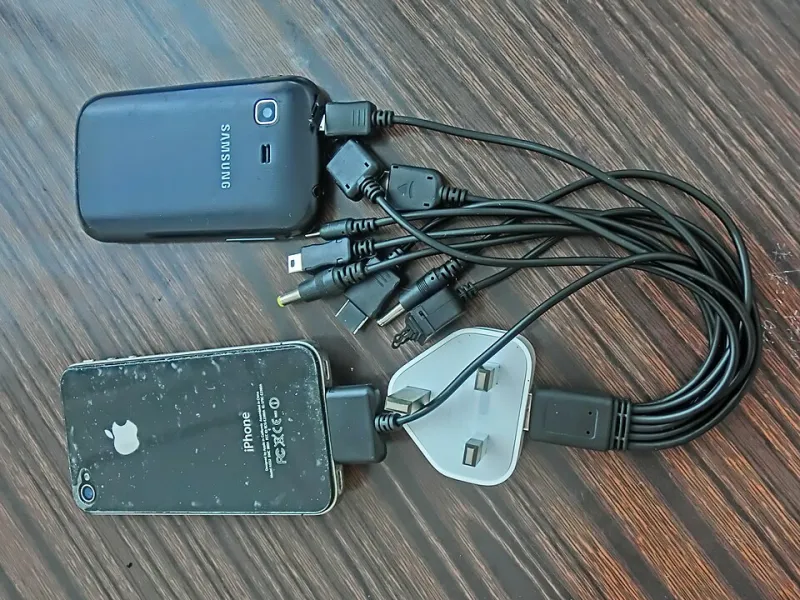
Photo: Huwanglaimtangms, CC BY-SA 3.0, via Wikimedia Commons
Ask a longtime torrent user where their seedbox lives and you will hear about a Raspberry Pi in a closet, a cheap VPS, or a friend's NAS. In 2026, a growing number of US users will just hold up their phone. Mobile torrenting is not new. What is new is the combination of big storage, fast cellular data, and clients that can run quietly in the background. The phone has become the edge of the swarm.
The phone is already a server
A modern Android phone has more compute than the laptop that used to run someone's whole library. With a 512GB microSD card or a generous internal drive, a phone can hold a respectable collection. A 5G connection can download faster than many home Wi-Fi networks. A mobile BitTorrent client can seed while the phone charges overnight. That is a seedbox, even if it fits in a pocket.
iOS is the awkward cousin. Apple's App Store has not been friendly to full BitTorrent clients, so iPhone users rely on workarounds: remote controls for a home seedbox, web-based clients, or sideloaded tools that come and go. The result is a split culture. Android users can go phone-first. iPhone users mostly use the phone as a remote.
The limits are real
A phone is not a server. It has a battery, a thermal limit, and a data cap. Seeding over cellular can burn through a plan in a weekend. Carriers may throttle or deprioritize heavy uploads. The phone gets hot. The OS kills background apps. The screen may be off, but the radio is not.
That means pocket seeding works best in specific conditions: unlimited or high-cap data, Wi-Fi at home, a charged battery, and a client that respects power settings. It is not a replacement for a dedicated box. It is a supplement.
Carriers and gatekeepers
US carriers have complicated relationships with peer-to-peer traffic. Some plans are generous. Some are not. Most carriers do not block BitTorrent outright, but they do shape traffic and enforce caps. App stores are another gatekeeper. Google Play has allowed torrent clients with varying degrees of enthusiasm. Apple has been stricter. The result is that mobile torrenting grows in the gaps between rules.
A different kind of swarm
Phone seeders change swarm behavior in small ways. They are often online at night, when the phone charges. They may have asymmetric upload speeds. They may drop off when a call comes in or a battery gets low. That makes them less reliable than a data center peer, but more human. In a swarm full of AI crawlers and cloud seedboxes, a phone that seeds overnight is a strange kind of authenticity.
The etiquette gap
Mobile users need their own etiquette. Do not seed over metered cellular unless you know what it costs. Do not expect a phone to hold a ratio on a private tracker. Do not leave a phone seeding in a hot car. Do not treat a pocket seedbox as a permanent archive. The old rules about sharing still apply, but the hardware adds new ways to be a bad neighbor.
The pocket-sized future
The next torrent boom may not be a new protocol or a new site. It may be a million phones quietly seeding while their owners sleep. That is a messy, inefficient, deeply human network. It is also exactly the kind of network that torrenting was built for: distributed, improvised, and hard to centralize. The seedbox in your pocket is not a threat to the old model. It is the old model, wearing new hardware.