Beyond Netflix: The Decentralized Revolution That Could Blow Up How We Watch Everything
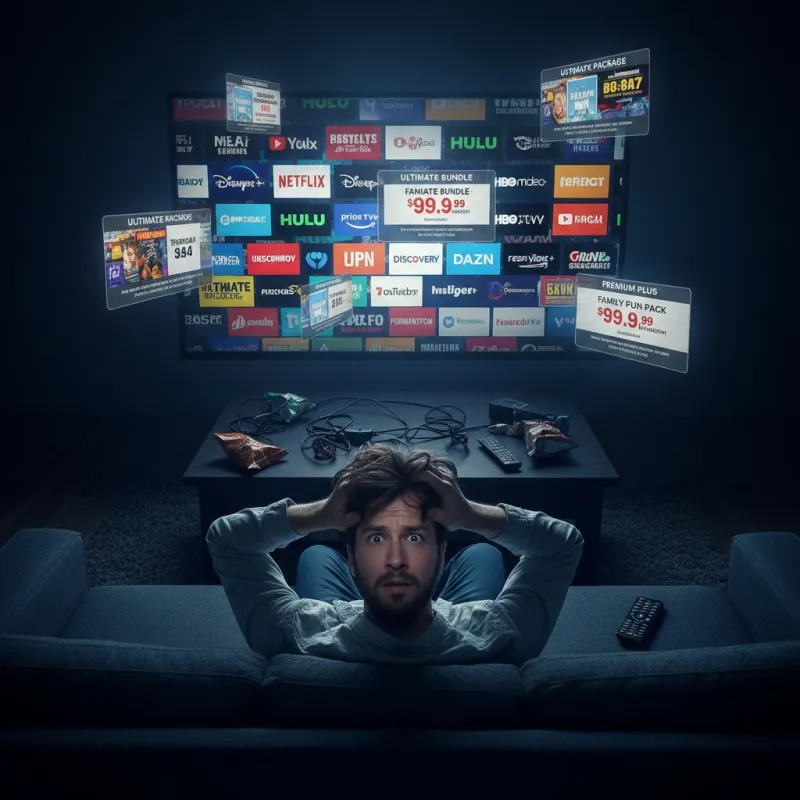
Remember when Netflix felt like liberation? Twelve bucks a month, unlimited movies, no late fees, no Blockbuster clerk judging your choices. It genuinely seemed like the future had arrived. Fast forward to today and you're juggling five different subscriptions, getting nickel-and-dimed for password sharing, and watching beloved shows disappear from libraries without warning because some executive decided the licensing math didn't pencil out.
The dream curdled. And a growing number of people are starting to ask a very uncomfortable question: what if centralized streaming was never actually the destination? What if it was just a rest stop?
The Walled Garden Problem
Here's the fundamental tension at the heart of modern streaming. Every major platform — Netflix, Disney+, Max, Paramount+, Apple TV+, the whole alphabet soup — is built around the same basic business model. Lock in subscribers, control the content library, and use proprietary algorithms to decide what gets seen and what gets buried. The user is technically the customer, but they have almost zero agency over what gets made, what stays available, or how the platform surfaces content.
This isn't just a consumer gripe. It has real consequences for creators too. Artists and filmmakers who built audiences on one platform can wake up to find their work delisted, their revenue share restructured, or their entire show cancelled mid-story because a quarterly earnings call went sideways. The power asymmetry is enormous and it flows almost entirely in one direction.
For the file-sharing community — people who've spent years operating in genuinely decentralized, peer-driven content ecosystems — this dynamic is deeply familiar. The promise of the early internet was distribution without gatekeepers. Somewhere along the way, we traded that promise for convenience, and the gatekeepers came right back wearing different logos.
What Decentralized Distribution Actually Means
Decentralized content distribution isn't a single technology — it's a design philosophy applied through several different technical approaches. The core idea is that no single company or server controls the flow of content. Instead, files and data are distributed across a network of participants, making censorship, arbitrary removal, and centralized monetization control structurally difficult or impossible.
Blockchain technology enters this picture as a mechanism for establishing ownership, tracking rights, and handling payments without a central authority acting as intermediary. When a creator mints their film or album as a token on a distributed ledger, the ownership record is transparent, immutable, and not subject to platform policy changes. Smart contracts can automatically distribute revenue to rights holders every time content is accessed or transferred — no studio accounting department required.
Projects like Audius have already demonstrated this model at meaningful scale in the music space. The platform processes millions of streams monthly with artists receiving direct payments governed by on-chain smart contracts. It's not perfect, and it hasn't dethroned Spotify, but it proved the plumbing works.
The Projects Worth Watching
Several ambitious platforms are pushing this concept into video and broader entertainment distribution with varying degrees of momentum.
Theta Network has built a blockchain specifically engineered for video delivery, using a peer-to-peer relay system where viewers share bandwidth with each other in exchange for token rewards. The more people watch, the more resilient and cost-efficient the network becomes. It's BitTorrent logic applied to live streaming infrastructure, and major broadcasters including some South Korean networks have quietly begun experimenting with it.
Livepeer tackles the transcoding problem — the computationally expensive process of converting video into different formats for different devices — and distributes that work across a decentralized network of GPU operators. This dramatically reduces the cost barrier for anyone who wants to stream video at scale without paying Amazon or Google for cloud infrastructure.
Odysee, built on the LBRY protocol, represents perhaps the most consumer-facing experiment in decentralized video. Creators upload content to a distributed network and viewers can access it through a familiar YouTube-like interface. The platform has attracted creators frustrated with algorithmic suppression on mainstream platforms, though it's also grappled with content moderation challenges that centralized platforms handle through sheer institutional weight.
The Algorithmic Gatekeeping Question
One of the most compelling arguments for decentralized entertainment isn't technical — it's philosophical. Recommendation algorithms on centralized platforms don't exist to help you discover great content. They exist to maximize engagement metrics that serve advertising revenue or subscription retention. What you see is what the algorithm has decided keeps you watching, which is a very different thing from what's actually worth watching.
In a truly peer-driven distribution ecosystem, discovery works differently. Reputation systems, community curation, and direct creator-to-audience relationships replace the black box. It's messier and less frictionless, sure. But it's also honest about what it is. When someone in a community recommends a film, they're not a revenue optimization function — they're a person who liked something and wants to share it.
This is, at its core, the same ethos that built the torrent community. The idea that sharing things you love is inherently valuable, and that distribution should serve the content and the audience rather than a corporate intermediary.
The Obstacles Are Real
None of this is happening overnight, and it would be dishonest to pretend otherwise. Decentralized platforms face significant technical hurdles around scalability, user experience, and content moderation. Blockchain-based systems have historically struggled with the gap between elegant theory and clunky real-world usability. And the major studios — sitting on enormous IP libraries and deep legal resources — aren't going to cede their distribution control without a fight.
There's also the monetization question. Creators need to eat. A decentralized platform that can't offer reliable income is going to struggle to attract the talent that makes content worth watching in the first place. Token-based economies are volatile and often speculative, which creates real instability for anyone trying to build a sustainable creative career on top of them.
Why This Moment Feels Different
Subscription fatigue is real and it's accelerating. Price hikes, content library shrinkage, and the general sense that streaming platforms are increasingly extracting value rather than delivering it have created genuine consumer frustration at a scale that didn't exist five years ago. That frustration is a market opportunity, and decentralized platforms are starting to get serious about capturing it.
The infrastructure has also matured considerably. Early blockchain applications were slow, expensive, and inaccessible to non-technical users. Layer-2 scaling solutions and purpose-built media blockchains have addressed many of those limitations, bringing transaction costs and speeds into ranges that actually support real-world content distribution.
At ExtremeTorrents, we've always understood something that the streaming industry is only now being forced to reckon with: peer-to-peer distribution is resilient, democratic, and fundamentally hard to kill. Whether that future runs on BitTorrent protocols, blockchain smart contracts, or something nobody's invented yet, the direction of travel is becoming clearer.
The walled gardens are cracking. What grows in the space between the walls might be more interesting than anything currently inside them.